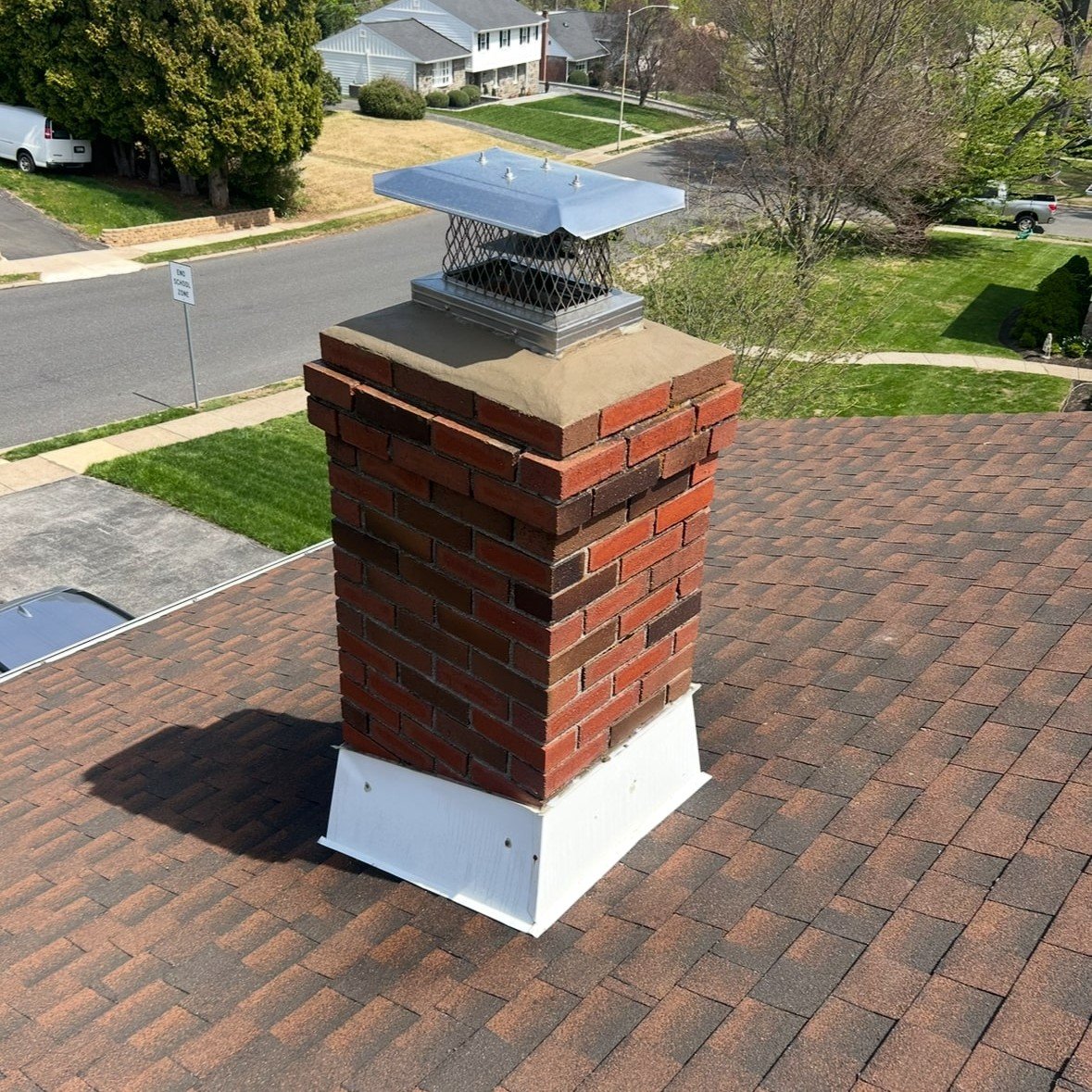
Your Drexel Hill home’s chimney crown may not be the most noticeable part of your property’s structure, but it plays a major role in protecting your chimney system from weather-related damage. Located at the very top of the chimney, the crown is a specially designed concrete or masonry slab that covers and seals the opening around the flue. It’s designed to shed water away from the chimney and prevent moisture from seeping into the masonry below.
Unfortunately, because it sits at the highest and most exposed point of the chimney, the crown takes a beating from Pennsylvania’s freeze-thaw cycles, heavy rain, wind, and snow. Without proper care, small cracks can develop into significant issues that affect the overall safety and longevity of your entire chimney system.
The Importance of Chimney Crown Repair and Maintenance
What the Chimney Crown Does
The primary job of your Drexel Hill home’s chimney crown is to seal the top of the chimney and keep out water. It also provides a slight overhang that directs water away from the bricks beneath it. When properly built and maintained, the crown works together with your cap, flue liner, and flashing to create a moisture-resistant chimney system.
Because moisture is one of the biggest enemies of masonry chimneys, the crown plays a crucial defensive role. Water intrusion can lead to spalling bricks, crumbling mortar joints, and even structural instability if it reaches the flue tiles or firebox area. That’s why a well-constructed and maintained crown is essential to the health of the entire chimney.
Many crowns begin to show signs of damage within just a few years if they weren’t built properly or haven’t been maintained.
Why Cracks and Deterioration Matter
Many crowns begin to show signs of damage within just a few years if they weren’t built properly or haven’t been maintained. Hairline cracks can appear from minor temperature shifts, while larger fractures often result from repeated freeze-thaw exposure. Once cracks develop, water can enter and expand the damage even faster.
What starts as a cosmetic issue quickly turns into something more serious. Water can trickle down into the chimney’s interior, weakening mortar joints, rusting components, and even causing mold or staining on ceilings and walls. In winter, trapped moisture inside the cracks in the crown freeze and expand, making the damage worse with each cycle. Left untreated, this can eventually require a complete chimney rebuild.
Regular Inspections Can Catch Early Signs
Because most homeowners can’t see the top of their chimney from the ground, damage to the crown often goes unnoticed until signs appear inside the home. That’s why scheduling a professional inspection at least once a year is so important.
Lou Curley’s Chimney Service in Drexel Hill offers detailed inspections that include a close look at the crown and cap. Technicians check for cracks, missing pieces, signs of erosion, and any separation between the crown and flue liner. If problems are caught early, a sealant or resurfacing treatment can often extend the life of the crown and prevent major repairs.
Repairing or Rebuilding the Crown
When damage is found, repairs should be made before the next wet or freezing season rolls in. In some cases, small cracks can be sealed with a waterproof, flexible material that allows for movement while still keeping water out. For more extensive damage, a crown resurfacing may be performed, adding a new protective layer.
If your Drexel Hill home’s chimney crown is beyond repair or was improperly constructed to begin with, a full rebuild may be necessary. In this process, the old crown is removed and replaced with one built to modern standards, often with a sloped edge, drip lip, and proper overhang to direct water away from your chimney system. While more involved, this type of repair significantly improves chimney longevity.
Protecting Your Investment
A well-maintained chimney is safer, more efficient, and more attractive. Taking care of the crown helps preserve the rest of the chimney and saves you money by avoiding larger masonry repairs. It also reduces the risk of leaks, smoke problems, or unsafe chimney conditions.
In Delaware County and the surrounding areas, the freeze-thaw weather pattern makes chimney crown care especially important. If your home’s chimney hasn’t been inspected recently, or if you’ve noticed signs of water damage near the fireplace or flue, now is the time to schedule an evaluation.
Lou Curley’s Chimney Service is here to help you stay ahead of issues before they become costly. Contact us today to schedule your annual chimney inspection or to learn more about chimney crown repair, maintenance and installation in Drexel Hill that will keep your system working safely and efficiently.