
Stainless Steel Chimney Liners: Installed by Delaware County’s Certified Relining Team
When it is time to reline a chimney, the question is not whether you need a liner. It is which liner will hold up to your appliance, your fuel, and decades of Pennsylvania weather. For most homes in Delaware County and on the Main Line, the answer is stainless steel.
Lou Curley’s Chimney Service has installed UL listed stainless steel liners in thousands of flues across our service area. Our team is CSIA and F.I.R.E. certified, and our founder, Lou Curley, is Pennsylvania’s first CSIA Master Chimney Sweep and an NFI Master Hearth Professional. We size, fit, and install the liner the right way the first time, then back it with the manufacturer’s lifetime warranty.
Ready to talk about your relining project? Call 610-626-2439 or request an appointment online.
What a Chimney Liner Does and Why It Gets Replaced
A chimney liner is the passage that carries heat, smoke, and combustion gases from your appliance safely up and out of the chimney. A sound liner does three jobs at once: it shields the surrounding masonry and framing from intense heat, it protects the brick and mortar from corrosive combustion byproducts, and it gives the appliance a correctly sized channel so it drafts and vents the way it should. When a liner is cracked, corroded, or the wrong size, any of those protections can break down.
Common reasons a liner needs to be replaced include:
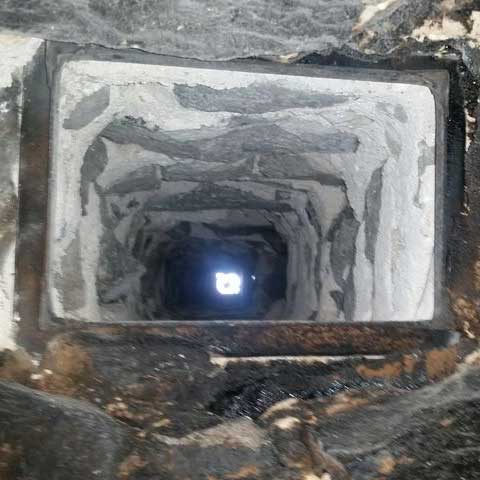
- Cracked, spalled, or deteriorated clay flue tiles, common in older Delaware County and Main Line chimneys
- Corrosion, holes, or separation in an existing metal liner
- A flue that is the wrong size for a newly installed or replaced appliance
- Damage found during an inspection after a chimney fire
- Gaps or breaches that leak combustion gases or fail a safety inspection
- A change in fuel type or appliance, which changes the venting requirements
Why Choose a Stainless Steel Liner Over Aluminum?
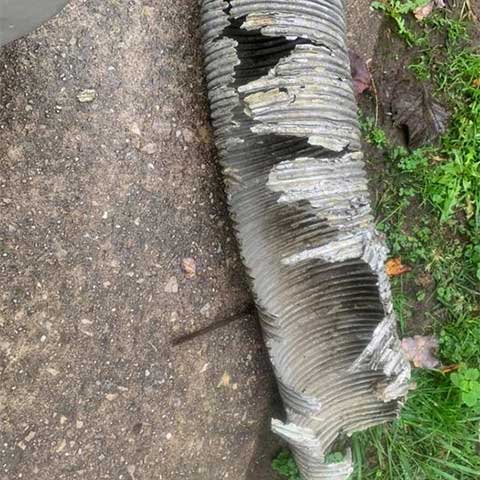
Before picking a liner, two factors matter most: the appliance you are venting and the fuel it burns. Aluminum liners are only approved for certain gas appliances. Stainless steel liners are approved for every common fuel: gas, wood, oil, and pellet. That alone makes stainless the preferred choice for most Delaware County homes.
A few other reasons stainless steel comes out ahead:
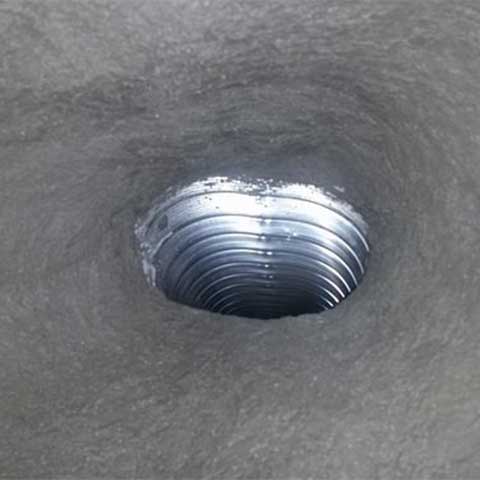
- Compatible with all fuels. Whether you are relining a chimney that vents a wood stove, a gas insert, or an oil furnace or boiler, stainless steel handles the heat and the byproducts.
- Easier on offsets and long runs. Aluminum is fragile and easy to tear during installation, especially in chimneys with offsets or tall stacks. Stainless steel comes in rigid and flexible forms that handle those configurations.
- Built to last. Aluminum corrodes quickly under combustion byproducts. Stainless steel, when installed and maintained by certified pros, carries a lifetime warranty.
- Future-proof.. If you ever change fuel sources down the line, a stainless liner is far more likely to stay code-compliant for the new setup.
Aluminum Liner
Lining Removed – Before
Stainless Steel Liner – After
What the Installation Process Looks Like
Most stainless steel liner installations are completed in a single day once any prep work and repairs are done. Here is how our team approaches the job:
- Inspection and sizing. We start with a thorough evaluation of the chimney, the appliance, and the existing flue. Correct liner sizing is based on the appliance being vented, the chimney, and the manufacturer’s requirements, not flue dimensions alone. This is how we determine the correct liner diameter and length, and how we catch any damage or debris that needs to be handled before the liner goes in.
- Prep work and repairs. If there are damaged flue tiles, missing mortar joints, a damaged crown, or significant creosote buildup, we address those first. A liner installed over a compromised chimney is a liner that will not perform.
- Liner installation. Once the chimney is ready, we lower the liner into place from the top, secure it at the top termination and at the appliance connection, and verify proper installation and venting.
Every step is documented and the work is performed by our certified technicians, not subcontractors.
Why Homeowners in Delaware County and the Main Line Choose Our Team
A stainless steel liner is a significant investment, and it only delivers on that investment if the installation is done correctly. A few things that set our team apart:
- PA’s first CSIA Master Chimney Sweep. Our founder, Lou Curley, holds the credential and built the company around the standards behind it.
- Multi-credentialed team. Our technicians hold CSIA and F.I.R.E. certifications, which means we are trained to inspect, install, and verify the work to national fire safety and venting standards.
- Local focus. We work in Delaware County and across the Main Line every week. We know the housing stock, the older chimneys, and the appliance mixes that homeowners around here actually have.
- UL listed liners only. We do not cut corners on materials. Every liner we install carries a manufacturer’s lifetime warranty.
Why You Should Not DIY a Stainless Steel Liner
A chimney liner is not a forgiving installation. An incorrectly sized liner can starve the appliance for draft, push smoke or carbon monoxide back into the home, or leave clearances that put combustibles at risk. Even a properly sized liner that is not secured correctly at the top or the appliance connection can shift and fail over time.
Our team installs to manufacturer spec, to NFPA 211, and to the chimney’s actual condition, not a generic checklist. The liner is too important, and too expensive, to risk on a guess.
Caring for a Stainless Steel Liner Over Time
Stainless steel is durable and close to maintenance-free, but it still benefits from routine care. The single most important thing you can do is keep up with annual chimney inspections and a professional sweeping. A yearly visit lets our certified technicians check the liner and the full system, catch anything developing early, and keep everything venting safely for the long haul. In between visits, if you ever notice smoke or odors backing up into the home, give us a call and we will take a look.
Ready to Reline With Stainless Steel? Call Our Team
Our team has relined thousands of flues across Delaware County and the Main Line. We have the experience, the training, and the certifications to help you pick the right liner, install it to spec, and keep it in great shape for the long haul.
Call 610-626-2439 or request an appointment online to get started.
Looking for the bigger picture? Visit our chimney and flue relining hub, or get specifics on gas and oil furnace and boiler flue relining.